Intellectual Property, or IPs, is considered a valuable asset for companies. Most tech CEOs hear ‘IP’ & think ‘Patents,’ but IP includes content, copyrights, trademarks, product design, brand protection, character licensing, and even patents. Disney has weaponised it like no one can. Disney doesn’t just hold on to these IPs; they thrive on them and expand them. This article will explain how Disney used IP in 5 ways as a strategic moat, growth engine, and revenue multiplier.
Tech companies often delay thinking about IP until they’re served with a lawsuit. Disney, on the other hand, builds billion-dollar businesses around IP from day one. IPs define the company’s identity, not only helping it set itself apart from others in the industry but also helping it build trust among the public. If you’re investing in content, UX, product design, and marketing, you’re already working with IP.
The question is: Are you treating it like a liability or an asset?
Here’s how Disney leveraged IP to become an empire.
1. Marvel Acquisition: Buying IP, Not Just a Company
Long before the acquisition, Disney & Marvel had a close relationship through licensing and distribution deals. As early as 1995, Disney expressed interest in acquiring Marvel, though a deal didn’t materialize at the time.
Strategic IP Play
In 2009, Disney acquired Marvel for $4 billion, not only for operations but also to acquire 7000+ IP portfolios.
With this, they managed to reclaim rights to the previously licensed out characters through legal manoeuvring and renegotiated deals. Not only that, they deployed the characters across multiple channels, including TV, films, toys, video games, and theme parks.
Business outcome
Disney has generated $35B+ in revenue since the acquisition and achieved great ROI in under 6 years, driven by IP-backed merchandise and licensing.
Takeaway
IPs can be programmed for recurring revenue across channels. They are more than just a legal protection.
2. Mickey Mouse: The Case Study in Copyright Manipulation
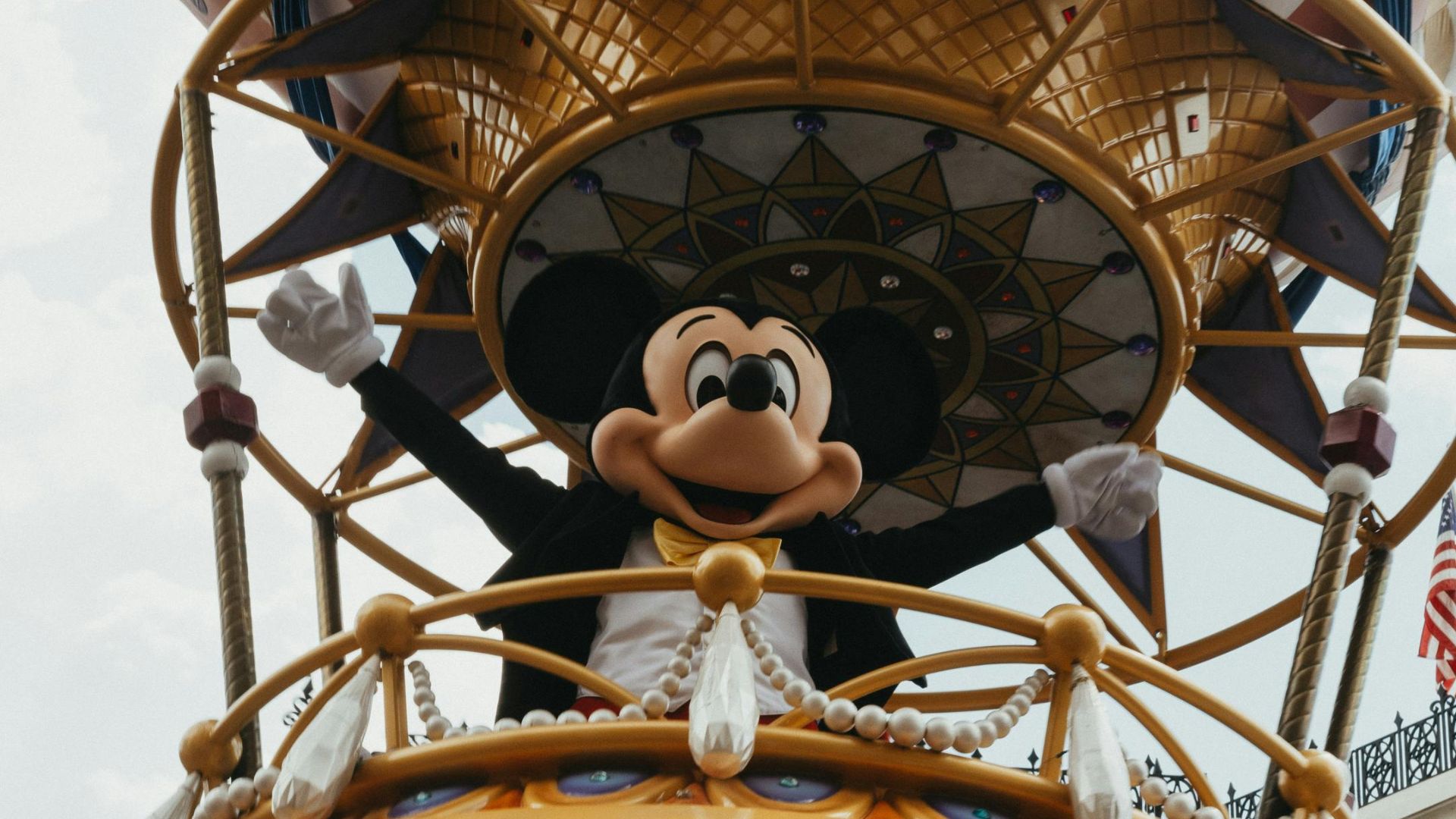
When we think of Disney, we think of Mickey Mouse, created by Walt Disney and Ub Iwerks in 1928. He is not only one of the most well-known characters in pop culture, but also the mascot of The Walt Disney Company. So what did Disney do?
Strategic IP Play
Mickey debuted in 1928 and should have entered the public domain decades ago. Disney went all out in keeping him in.-
- Lobbied the U.S. Congress to extend copyright laws, which led to the formation of the “Mickey Mouse Protection Act”.
- Kept releasing new variants like Wizard Mickey from the film ‘Fantasia’ to reset copyright dates.
- Filed trademarks on almost everything related to Mickey- silhouette, voice, music, etc.
Business outcome
Disney maintained a monopoly on the animated icon for 90+ years and monetized it across every Disney business line, like licenses, theme parks, and merchandise.
Takeaway
IPs are flexible; they can be extended, refreshed, and reimagined to outlast competition.
3. Disney Princess Franchise: Bundling IP like SaaS Features
SaaS, short for ‘Software as a Service’, is a widely used model for delivering products to the market. Netflix and Google Workspace are examples of SaaS, but how did Disney use a similar approach with IP?
The Disney Princess franchise featured female protagonists from various Disney films, aimed at young girls. The idea behind this franchise was to give fans an experience that would let them get close to their favorite characters.
“Standing in line in the arena [of a Disney on Ice show], I was surrounded by little girls dressed head to toe as princesses…They weren’t even Disney products. They were generic princess products they’d appended to a Halloween costume. And the light bulb went off. Clearly, there was latent demand here. So the next morning I said to my team, “O.K., let’s establish standards and a color palette and talk to licensees and get as much product out there as we possibly can that allows these girls to do what they’re doing anyway: projecting themselves into the characters from the classic movies.”
-Andy Mooney, Chairman of Disney Consumer Products, on the creation of Disney Princess, reported by The New York Times.
Strategic IP Play
They bundle characters like Cinderella, Snow White, and Belle into a single licensing suite. In detail, they united merchandise and media deals under one umbrella, filed trademarks for the bundled franchise rather than individual characters, and made exclusive bundle licensing deals with retailers.
Business outcome
They generated over $5B in retail sales from a carefully branded collective of fictional royalty. They created scarcity in a way no competitor could match with a multi-character suite of such synergy.
Takeaway
IP can be bundled together like a product suite. Just as SaaS companies offer features, IP bundles deliver exclusive value and pricing power.
4. Frozen: Instant IP Fortress Built from Day One
Frozen, Disney-Pixar’s newest franchise, entered the roster, released on 27th November 2013, and was an immediate hit. But what did Disney do to generate interest?
Strategic IP Play
Before the release, they preemptively filed trademarks in over 100+ categories globally. Similarly to Mickey Mouse, they locked down terms like ‘Elsa’ or ‘Let it go’, outfits, merchandise designs, etc. They filed patents for designs to be used in toys, merchandise, and theme parks. Lastly, Disney has enforced strict policies on third-party sites like Etsy and Knockoff manufacturers to protect brand integrity and prevent unauthorized sales.
Business outcome
All the plans went in the right direction, as Frozen became the highest-grossing animated film of 2013, earning over $1.2 billion at the global box office. The merchandise alone generated over $1 billion in under 2 years.
Takeaway
Treat IPs like launching a startup; if the product succeeds, your IP filings determine how much value you keep.
5. Theme Parks as IP Distribution Channels
Theme Parks or Amusement Parks are popular recreational destinations, offering retreats and experiences for you and your family to enjoy and create memories. How did Disney integrate IP into the mix? Theme parks like Disneyland and Disney World are tied to IP, from rides and mascots to sound effects and costumes.
Strategic IP Play
They patented ride mechanics and trademarked everything from background music to in-park signage. Set up and structured a decade-long exclusivity to prevent competition (for example, Marvel rides in Disneyland but not Universal Florida) and controlled even minor IP like costume design for in-park staff to avoid replication in other parks.
Business outcome
Parks generate $30 B+ annually, mainly from exclusive, IP-backed experiences, and have created a competitive moat that can’t be legally or creatively copied.
Takeaway
Your experience is IP. Don’t just patent features—own the entire interaction.
Conclusion
Today, Disney is one of the biggest names in the industry, especially in terms of IP, creating experiences across multiple channels based on its existing IP and newer ones. It’s not just limited to Disney; every company has IP at its disposal!
The following points can help Tech Execs understand more about IP-
- IP is leverage —Disney doesn’t just invent new products; it reinvents IP.
- IP is compounding —Every new character/series is a 30-year revenue stream across channels.
- IP is a moat —Competition can’t legally copy or even emulate Disney’s core.
In conclusion, if you’re investing in design, content, or user experience and not protecting it as IP, you’re building someone else’s moat.
Leave a Reply