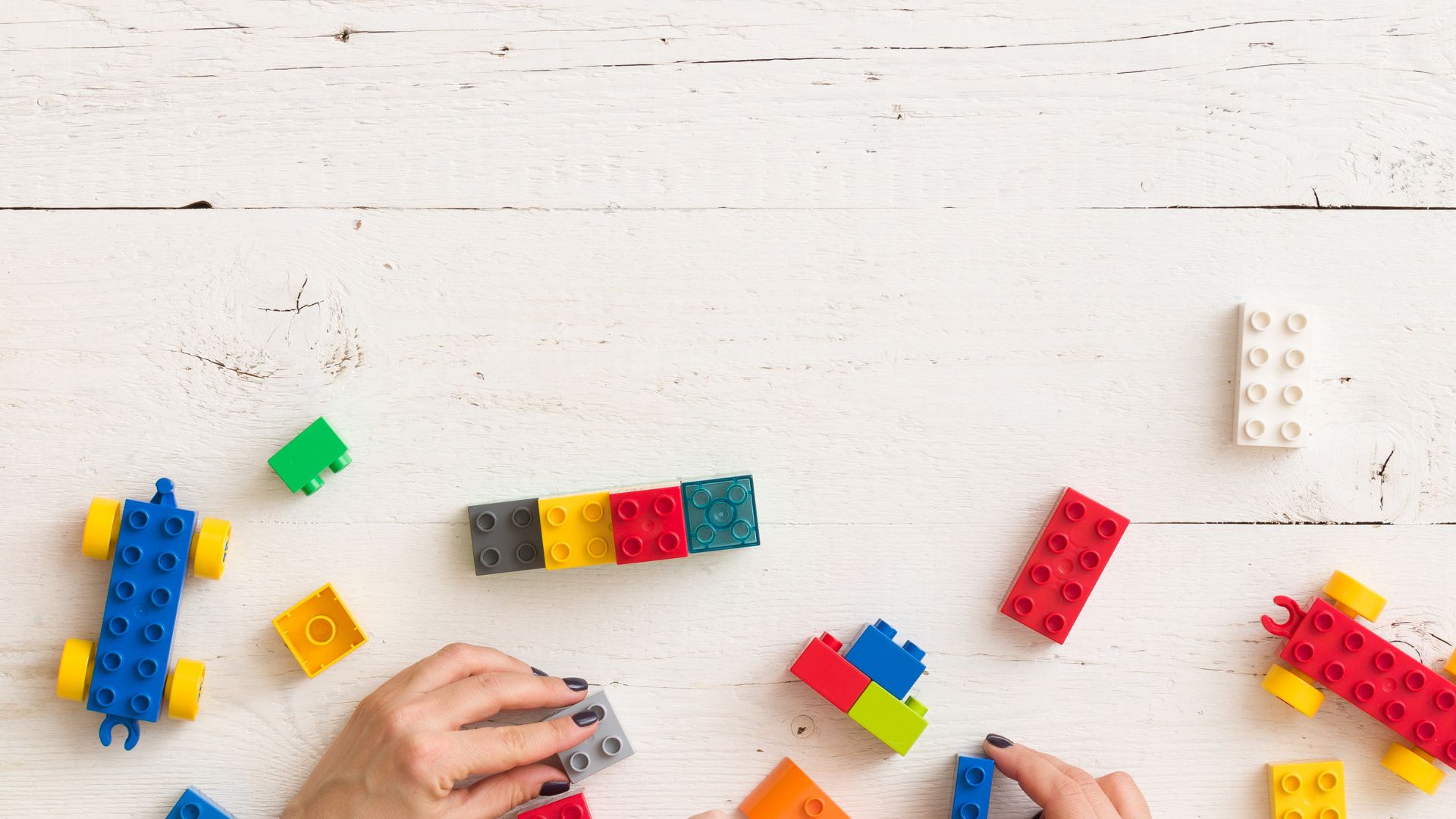
Toys, how do we define them? Memories of childhood, artifacts of creativity and innovation, and a child’s playful companion, to name a few, are some ways to describe them. Their existence predates human history back to early civilizations. However, this story is about one such toy that is still enjoyed by people of all ages today.
Building Blocks, inspired by the play of stacking bricks for construction and architecture, help innovate real-life processes and also help understand human psychology. They help a kid boost their motor and cognitive skills; in fact, they are a promising therapy for conditions like autism. This article is about one such brand that built itself with these bricks, and today is one of the biggest toy brands in the world – LEGO.
But what can a tech executive learn through this story?
Prologue: “Let’s Build a House”
LEGO originated in the 1940s, when Ole Kirk Christiansen started creating wooden toys in his workshop. The term LEGO comes from the Danish phrase “Leg Godt,” meaning “Play Well,” while in Latin it also means “I put together.” The company faced numerous struggles in its survival due to tragedies such as the Great Depression and World War 2, which had a profound impact not only on Ole and his family but also on the whole country where he was born.
Later in 1947, LEGO decided to expand into plastic toys, as they were becoming a cheaper alternative due to the financial crisis people faced after the war. Inspired by the “Self-Locking Blocks” invented by Hilary Page for the Toy Company Kiddiecraft, LEGO re-entered the market with their “Automatic Binding Bricks”.
1954 was the year the bricks got improved. Godtfred Christiansen’s son got the idea of a toy system while talking to an overseas buyer. He understood that integrating a system into their product would help kids use their imagination. However, there were some issues like the bricks not interlocking well and versatility being weak, so in 1958, the new modern LEGO brick design was developed, where ABS became the new replacement for the material from cellulose acetate, and a patent was applied for on 28th January 1958, since then LEGO started to climb the ladder of success one at a time with introducing their first internal series called ‘Duplo’ to releasing variety of sets based on buildings and other themes like space. They didn’t just stop there. In 1978, LEGO introduced its elusive minifigure, which is now an integral part of the brand.
How will this help the Tech executives?
The following section will tell us about a critical time for LEGO, as it would not only help us understand how LEGO integrated IP to expand its range, but also how one internal IP almost saved LEGO from bankruptcy, and how it became the World’s No.1 Toy Brand. In simple terms, IP isn’t just a legal safeguard but also a business recovery and growth engine when used appropriately.
“When the Bricks start breaking”
2003 was an impactful year for many, the third year into the Y2K era, the advent of electronics like mobile phones and computers, and the growing popularity of the internet. Video games also started to gain pace globally due to advancements. Game conventions like E3 and Gamescom became a source for companies to introduce new IPs and tech to gamers, and the growing popularity of gaming consoles like Sony PlayStation and Xbox was among the top-selling products at the time. But what does this have to do with LEGO? 2003 was the lowest point for LEGO, and due to many factors:-
- The boom in the video game industry led to reduced toy sales as kids’ interest in video games grew.
- The 1958 patent for the interlocking brick finally expired, increasing competition and counterfeit brands.
- Mismanaged focus on things like theme parks, books, clothes, and even toys like action figures, which not only damaged the brand but also were a failure in terms of sales. A prime example of this was Galidor, a series integrating action figures that would interact with the ongoing television show by the same name.
- Increase in manufacturing costs and other expenditures, including license costs.
- Reduced variety in the sets released, which also had unique parts, only to affect production costs.
“LEGO had gone through a period of stagnancy. They had reached the end of their natural growth cycle.”
David Robertson, Author of ‘Brick by Brick’
Now, LEGO had already taken the first step into IP even during this time with their first licensed sets being based on the ever-popular sci-fi series, Star Wars; however, it was short-lived, which couldn’t retain the income they needed to survive since even though the sets were going off the shelves swiftly but the dependency on the IP had two issues, one being the following of the franchise, there won’t be any sales unless a new media has been produced to capitalise on, other issue being the licensing costs which even though sets earn decent profit, that already goes into the fee. But that didn’t stop LEGO from giving up.
IP Insight: Losing a Patent is not just the end – it’s a start for needing a real IP strategy
Example: You have lost exclusivity on your algorithm- Now what? How will you defend the business?
“A New Chronicle Part-1”
1993-2003 was an interesting time for LEGO, which also led them to push heavily into researching new ways to innovate their product line. LEGO approached Chris Faber, a designer working at one of LEGO’s clients, Advance Studio, to create a new product line. Chris brought out many ideas which include Cybots which was a concept of weird blend of human and machine, the theme was a little dark so it inevitably got rejected, next was Slizer (or turbobots as it was localised in US), which not only was a success but also helped LEGO discover an new type of genre in toys, Constructible Action Figures or Constractions for short.
Slizer featured robot-like creatures that shoot discs, which can be collected separately, and had parts that could be used for customization or combined into a bigger figure. The series consisted of 8 characters, with each having a unique ability.
Through Slizor, LEGO tapped into the trend of “Craze Product”, which was the rage thanks to franchises like Pokémon. Slizer earned $100 million in sales due to its enormous success. Later, LEGO launched Robo Riders, a design change with creatures that were motorcycles, which also played similarly to Slizer. Released with a reduced no. of units with only six characters, it was a short-lived series that worked differently than Slizer but also failed in terms of sales.
However, it innovated in packaging with canisters that, when put in the fridge, expose a code that can be used to access the content on their website, and the upper cap is used as a larger wheel for figures, taking a page from what they did with Slizer.
Now, the thing about both Slizer and Robo Riders was that they didn’t fit into a main line of LEGO’s portfolio.
“Was it Slizer from LEGO? Was it LEGO Technic Slizer or LEGO Slizer from Technic? We were so afraid of destroying what we came from and going into this new world…It was really an uphill launch. We didn’t think it would work.”
Soren Holm, Former Design Chief at LEGO
And his concern was correct, since both Slizer and Robo Riders used parts from the Technic line, known for its complex, technical construction, and which was also the first LEGO line to use ball joints. They did have the LEGO Technic branding on both, but it wasn’t shown enough, which led to more questions about the brand image.
After Robo Riders’ failure, LEGO stopped with the “craze product” model altogether and went back to the drawing board for a new product line.
IP Insight: Experimentation in IP can help explore new ventures and improve products, but it is also a gamble.
Example: Console Manufacturers producing a portable version of their console after looking at the increased popularity of mobile phones/handheld devices. Real examples include the Sony PlayStation Portable and the Nintendo Switch.
“A New Chronicle Part-2”
Through the life cycle of both Slizer and Robo-Riders, LEGO learn a lot of things and also remind themselves of what they originally did, the issue with both series was that they didn’t have any substance, which wouldn’t help a kid fall in love with, In modern terms, we can say LEGO never wanted to make toys which gets popular for a while and then immediately forgotten, they wanted a unique series, have a sense of mystery and a story people can remember for a long time. That’s when this New Chronicle comes in.
“Boneheads of Voodoo Island” was already in the works in secret during the life cycle of Robo Riders, which was an improved idea derived from Cybots, which Chris presented to LEGO way back in 1995. The premise was set in an island called “voodoo island” whose residents are the tribe of boneheads, this much was planned but they couldn’t think after that, so Bob Thompson who was the Lead Writer for the project outsourced the concept to freelancers, eventually reaching to one of his colleagues, Alastair Swinnerton who was intrigued by the idea and pitched it to his peers as well.
“Something about Bone Heads caught my eye, so I decided to work on that one. It had a kind of Easter Island vibe to it, I felt, and I’d always been fascinated with that subject.”
Alastair Swinnerton, Writer
From that point on, the team got to work- from the theme to character designs to even names defining a trait of the character, which were inspired by the Polynesian cultures, but they had to make changes due to the accusation of cultural appropriation but some things stayed, which ended up being important, like the names- Tahu, Gali, Lewa, and Onua representing the elements of nature.
What about the central star of the project? Boneheads worked on an action system for competitive play where if the weapon hits a Bonehead’s ‘head’, it will pop out, inspired by Rock’em Sock’em robots by Mattel. However, the project failed because the executives weren’t happy with the “head decapitation” element, which they deemed too violent. The samples also failed among the test groups.
Later, the plan was changed from a head to a mask, which ended up being the eureka for the team, which also made them realise that they can improve upon it in terms of all the elements of the project, so the early concept was thrown all out while retaining some elements and the premise, which got readjusted for their new series.
Now, the team set out to come up with a new name, given how much the project had evolved. Many names were suggested, like Bioknights or Afterman, but one was finally chosen —Bionicle.
Bionicle- short for Bionic Chronicle, which also sounds similar to Mechanical- is a series set on the island of Mata Nui, the same name as the god who was tricked into deep slumber by his brother Makuta. After passing centuries the land began to resurfaced over his skeleton, where a group of tribes called Matorans now live, one time six canisters land on different parts of the island, the figures revealed from turned out to be the Toa (warrior), who explore the region, meeting the elders of the tribe, Takuta, who told them that they are the heroes who can save the island from the residing evils.
For the time, Bionicle managed to set itself apart thanks to its unique setup and storytelling, which also bridged the gap between science and magic since the characters were ‘mechanical’.
“Experience is the best teacher” is how we can define Chris Faber and how his life struggles influenced the creation of Bionicle. Early on, Chris had severe issues with his eyesight due to a tumour residing at an inaccessible part of the brain, called a Prolactinoma. He was on heavy medication, advised by a specialist. These events not only helped him build ideas for Bionicle but also made him realize a different perspective in life.
Many of the elements in Bionicle were influenced by the curious questions. Understanding the human body and its complexities, what if parts were just replaceable? And many other thoughts.
Bionicle was now in its final stages of development as everything came together. Lego went all in with its Bionicle promotion.
In 2001, Bionicle was finally released as part of the Technic line; it was the first non-vehicular Technic set to be introduced. They came packaged in canisters resembling the same pods in the lore, which also served a practical purpose as storage, where you can put the figure back inside, and included dynamic art that can be seen by rotating the wrapper. The figure worked with a mechanism where using a stick attached to two gears on the back, rotating the sticks moves the hands, simulating an attacking action, improving upon on how boneheads worked, they also had masks which itself help define their uniqueness the first releases being the heroes, the Toa, consisting of 6- Tahu, Gali, Lewa, Onua, Pohatu and Kopaka. With each Toa having a unique ability/weapon, also representing the regions they hail from. On the side, they also did a couple of things, going on a tour to promote, releasing comics and books about the adventures.
Most importantly, the ‘Mata Nui online game’, a point-and-click adventure, lets you explore the island of Mata Nui as a fellow Matoran, learning what life is like as a Matoran and meeting the Toa. This game played a significant role in Bionicle’s popularity, which has continued to evolve as the franchise has grown. It gave LEGO confidence to build a multimedia franchise around its IPs, and, thanks to the increasing accessibility of the internet, it was going in the right direction for a long time, since it had more avenues to promote its products.
Bionicle indeed turned out to be a success in 2001, earning $160 million and becoming the number 1 product, even surpassing the Star Wars licensed sets.
2002-2003 was technically strong for LEGO. However, they still couldn’t escape the financial crisis they were facing, where BIONICLE was going strong since it was the only series to provide 100% of the profits, as their other sets still weren’t selling well, bionicle kept growing in those two years with lore updates ongoing through the mata nui online game introducing new enemies and even an update to the Toa as the Toa Nuva. Promotion was still strong, with tours, expansion into merchandise, and even in media like books and comics, which Greg Farshtey, a LEGO writer, managed.
He was responsible for refining the lore and story and was also loved by the community for his writing. Then in 2003, Lego finally released the first full-feature movie, “Bionicle: The Mask of Light”, which was also a critical success. Followed by a high-quality video game released on all platforms, it initially garnered mixed reception but became a cult classic over time.
In the same year, Lego shared news regarding the change in management, Kjeld Kirk Christiansen, grandson of Ole Kirk Christiansen, stepped down as the CEO, sharing his statement on why as “I won’t be able to take lego to where it should be” with in 2004, Jorgen Vig Knudstorp took the stage as the new CEO, took it upon himself to solve the problems the company was facing.
IP Insight: IP isn’t just limited to paper; it can be an anchor to the value of the company. It becomes an integral part of defining the company’s identity.
Example: Mobile operator companies designing mascots for their marketing campaigns or services, Tech companies integrating IP into software in the form of voice assistants and AI. Real example: During the lifecycle of Windows 10, Microsoft introduced an in-built voice assistant called Cortana, named after the character in the Halo game franchise who was also a supportive AI.
Lego’s overall rebuild – the 4-layer strategy
2004 onwards, while Bionicle was still bringing them revenue, LEGO got to work on refining some of their issues, which was done through a 4-layer strategy-
1. Improving the brick
Lego went back to look at the brick. They made some improvements to the design and applied 3D design trademarks for shape, dimensions, and materials used, including the ‘click’ sound when interlocking pieces, which was also trademarked because it became an essential aspect of both the product and marketing. The brick system for sets also got an update, simplifying the design and manufacturing process by eliminating the need to make new moulds for parts and saving costs. Lastly, took strict action against counterfeit brands that used a similar design.
2. Protect the minifigure
Minifigures also received an upgrade in design, and design patents were filed for aspects such as the head, torso, and arms.
Visual aspects, such as the iconic ‘smile on face’, were also trademarked globally.
3. Layer in licensing
In the early days, LEGO had already begun licensing external brands, including popular IPs like Star Wars, Harry Potter, and The Lord of the Rings, as well as automotive brands like Audi, Ferrari, Porsche, and McLaren, and fast food chains like McDonald’s. Through these deals, they created IP-specific sets with exclusive pieces protected through contracts and design patents. This resulted in them becoming collector’s items and expanding their audience. Sometimes, even with their internal IPs, as well as where LEGO toys were sold with McDonald’s meals.
4. Expanding the Internal IP portfolio
The success of Bionicle gave LEGO confidence in creating more internal works, which not only helped them bring back their innovative spirit but also understood a way of revenue where they won’t have to rely on external IPs, After Bionicle had its end in 2009, Lego pumped out new IPs, which were not only hits but also innovative in many aspects, these include Legend of Chima, Hero factory, Lego City, and especially Ninjago which also became a strong revenue provider for lego followed by its TV series released in 2012 and later a full feature movie in 2015 expanding its story just like bionicle did. Not only that, they filed trademarks, patents, and copyrights for them.
IP Stack Summary
| IP Tool | Lego Application |
| Trademarks | Brick shape, minifigures, set names |
| Design Patents | Minifig accessories, build instructions |
| Licensing Deals | External brands (Star Wars, Disney) |
| Trade Dress | Box designs, instruction style, logo style |
IP Backed Business Flywheel
How IP drove growth
1. Protected core- Through Trademarks and Trade Dress, they blocked off counterfeits
2. Power of Exclusivity- Limited-run and exclusive sets based on licensed IPs like the Millennium Falcon became collector items, and it wasn’t limited to just sets, pieces like minifigures based on licensed characters as well.
3. Retail Leverage- Premium shelf space thanks to IP-backed products.
4. New sources of revenue- Royalties from media produced based on IPs, licensing, and user-generated sets, i.e., LEGO Ideas.
Result: From 2003 to 2023, LEGO saw revenue increase from $1 billion to $9.8 billion.
Even after the Core patent expired, layered IP helped retain its image.
| Principle | Lego Action | Tech Parallel |
| Stack IP Defences | Trademarks + design patents | Code + UI patents + branding |
| License IP Smartly | Partnered with Star Wars, McDonald’s | Embed industry datasets, APIs |
| Create IP-Driven Brands | Built Ninjago, Bionicle | Think “moats,” not just features |
| Don’t Rely on One Asset | Moved beyond the brick | Diversify from core tech to UX + brand |
| Enforce Aggressively | Sued Chinese copycats & won | Act early—don’t tolerate clones |
Conclusion
This study on how LEGO brought itself back on its feet can be a valuable read for tech executives in many ways, including how LEGO had to reinvent the wheel time and again to ensure not only that its products remain innovative but also that people can enjoy the same creativity for generations. Today, LEGO is one of the biggest names in the toy industry. Since the 2010s, they have been on the rise, thanks to their varied range of IPs, from internal projects like Lego Technic, Lego Creations, and Ninjago to sets dedicated to external IPs like Star Wars, The Lord of the Rings, and Minecraft, with more being added to the portfolio soon.
This study is, in a way, also a love letter to the IP that saved LEGO and Bionicle. Even though it is today in a resting stage, it is still a beloved part of the LEGO community, with thousands of community-generated pieces of content every day in the form of short videos, fan creations, and, with the advent of 3D printing, even new parts and original creations showcasing its potential. Bionicle was filled to the brim with innovation, thanks to its unique spin on technic parts, which was limited to vehicle-based sets, earning LEGO many accolades. Now, the franchise is celebrated on its special day, called 810nicle Day or ‘Bionicle Day’, on 10th and 11th August.
Lego has always ensured that its products are not unique but innovative; it has never relied on cheaper products or faster execution. They won by turning brand, character, design, and licensing into defensible IP.
To conclude, if your company’s real moat is UX, data structure, design, or partnerships, then IP is your compounding layer- just like how it was for LEGO.
Leave a Reply